MOE Singapore Educator AI Roadmap: New AI Training Plan for Teachers
Singapore MOE's new Educator AI roadmap requires primary, secondary and junior college teachers to complete AI training modules by 2027, covering AI fundamentals, responsible use and classroom impact.
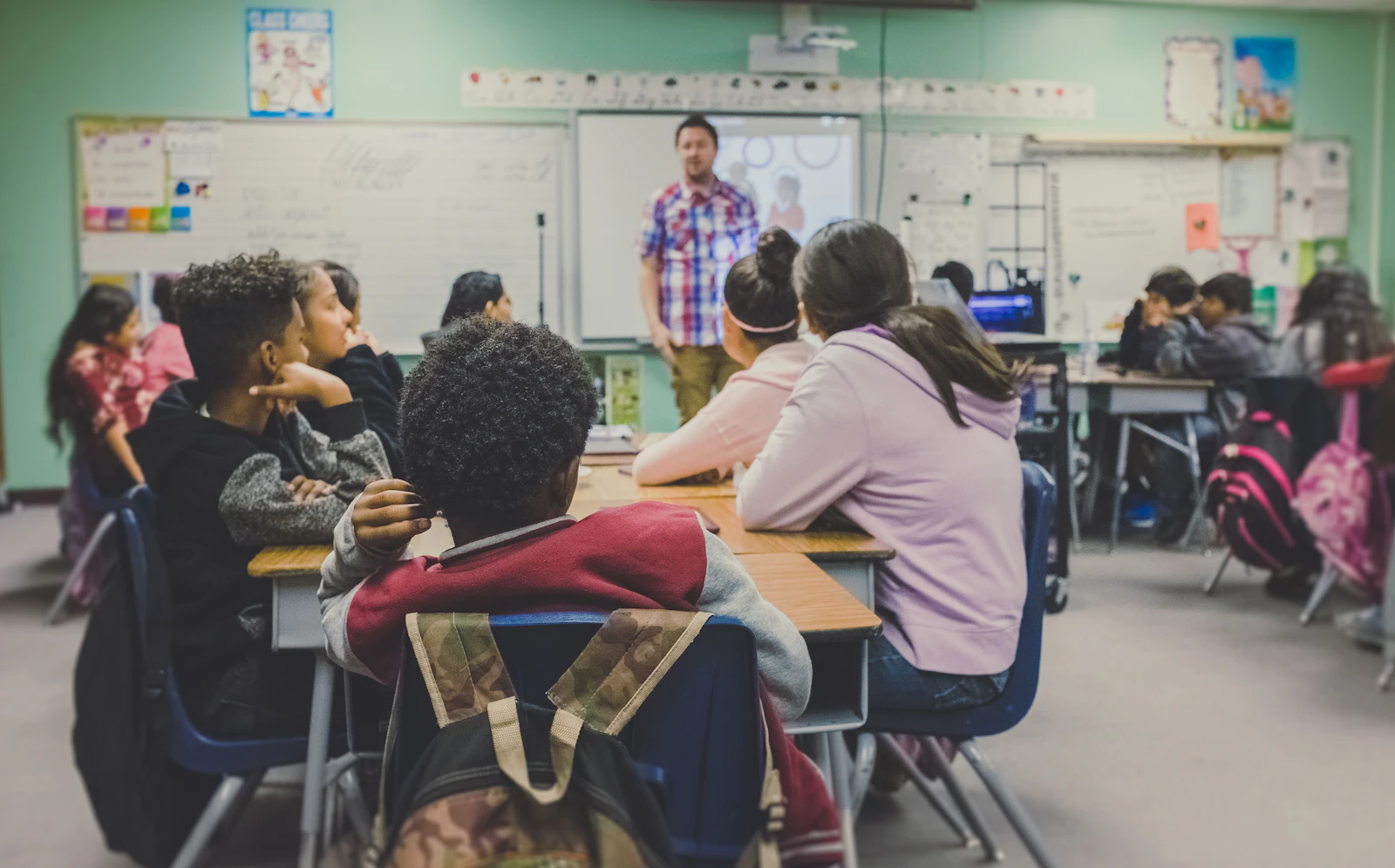
MOE Singapore Educator AI Roadmap: What Teachers Need to Know
Singapore’s Ministry of Education (MOE) is expanding its approach to artificial intelligence in schools with a new Educator AI roadmap.
The plan puts greater emphasis on helping teachers understand AI, use it responsibly and decide when AI actually improves teaching and learning.
A major part of the new direction is teacher training. Primary, secondary and junior college teachers are expected to complete three compulsory AI training modules by 2027. The modules are designed to cover AI fundamentals, responsible and ethical use, and the impact of AI on learning. :contentReference[oaicite:0]{index=0}

What Is the MOE Educator AI Roadmap?
The Educator AI roadmap is part of Singapore’s wider effort to prepare educators for a school environment where AI is becoming increasingly common.
Instead of simply teaching teachers how to operate AI tools, the approach focuses on AI literacy, responsible use and pedagogy.
That distinction is important.
Teachers need to understand not only what an AI system can produce, but also when its output should be questioned, checked or rejected.
The roadmap therefore connects AI skills with the teacher’s existing professional role.
AI Training for Singapore Teachers
Under the new plan, teachers across primary schools, secondary schools and junior colleges will complete three compulsory AI modules by 2027. :contentReference[oaicite:1]{index=1}
The training is expected to address three broad areas:
- Understanding AI fundamentals
- Using AI responsibly and ethically
- Understanding AI’s impact on teaching and learning
This means AI training is moving from an optional technology topic toward a more structured part of educator development.

What Will Teachers Learn About AI?
The exact structure of every training activity may evolve, but the roadmap emphasizes practical AI understanding rather than simply learning a list of prompts.
Teachers need to understand concepts such as:
AI Fundamentals
Educators need enough technical understanding to know how modern AI systems work at a basic level.
This includes understanding that generative AI can produce convincing answers while still making mistakes.
Responsible AI Use
Teachers also need to understand issues such as:
- Accuracy
- Bias
- Privacy
- Appropriate use of student information
- Copyright
- Ethical decision-making
Responsible use is particularly important in education because AI outputs can directly influence students.
AI and Learning
The third area concerns the effect of AI on teaching and learning.
Teachers need to consider whether AI is helping students develop skills or simply completing work for them.
That makes the teacher’s judgment increasingly important.
AI Tools in Singapore Classrooms
MOE-developed AI tools are also being introduced gradually.
According to the latest reporting, these tools are introduced from around Primary 4, with teacher supervision designed to support safe and responsible classroom use. :contentReference[oaicite:2]{index=2}
The goal is not simply to give students access to AI.
Instead, students should learn how to use AI while continuing to develop skills that remain important even when AI is available.
These include:
- Critical thinking
- Creativity
- Reflection
- Communication
- Problem-solving
- Independent judgment

Why Is Teacher Supervision Important?
Generative AI can produce useful material quickly, but it can also generate incorrect or misleading information.
For that reason, teachers remain an important part of the learning process.
MOE’s approach encourages educators to decide when AI adds genuine value rather than using AI simply because it is available. :contentReference[oaicite:3]{index=3}
For example, AI could help a teacher create different versions of a lesson activity.
But the teacher still needs to determine whether the material is:
- Accurate
- Age appropriate
- Relevant to the curriculum
- Suitable for the students
- Consistent with learning objectives
AI Should Support Teachers, Not Replace Them
One of the key ideas behind AI adoption in education is that technology should enhance teaching rather than remove the human role.
Teachers provide context that an AI system cannot fully reproduce.
They understand their students, classroom dynamics and individual learning needs.
This means the future classroom is more likely to involve human teachers working with AI tools rather than AI replacing teachers.
Singapore’s wider education technology strategy also places emphasis on the Singapore Student Learning Space (SLS) and AI-enabled education features designed around learning sciences. :contentReference[oaicite:4]{index=4}
Critical Thinking in the AI Classroom
AI creates a new challenge for education.
Students can potentially obtain answers much faster than before.
But getting an answer is not the same as understanding a subject.
Teachers therefore need to design activities where students must:
- Question AI output.
- Check information.
- Explain their reasoning.
- Compare different answers.
- Reflect on the quality of an AI response.
- Make their own final judgment.
This approach can turn AI from a shortcut into a learning tool.

What Does the Roadmap Mean for Teachers?
For Singapore educators, the new roadmap means AI skills are becoming increasingly important.
Teachers may need to become comfortable with:
- AI terminology
- Generative AI tools
- AI-assisted lesson planning
- AI-supported assessment
- Responsible AI practices
- AI-related student guidance
- Evaluating AI-generated content
However, the goal is not necessarily to make every teacher an AI specialist.
The more important objective is to give educators enough knowledge to make good professional decisions about AI.
MOE AI Roadmap and Professional Development
The three compulsory modules represent one part of a larger professional-development approach.
Teachers can also learn through school-level sharing, peer support and experimentation.
This is important because AI tools change rapidly.
A tool that is popular today may be replaced by a different system next year.
Therefore, educators need transferable AI knowledge rather than training that depends entirely on one specific application.
Singapore’s Broader AI Education Strategy
The Educator AI roadmap fits into Singapore’s broader strategy for education technology.
The country has already invested heavily in digital learning infrastructure, including the Singapore Student Learning Space.
The next stage is increasingly focused on how AI can be integrated into teaching while maintaining strong learning principles. :contentReference[oaicite:5]{index=5}
This creates three connected priorities:
| Area | Main Goal |
|---|---|
| Teaching with AI | Improve teacher workflows |
| Teaching about AI | Build AI literacy |
| Teaching in an AI era | Strengthen human skills and judgment |
This three-part perspective is becoming increasingly important as schools adapt to generative AI.
What Skills Will Matter Most?
The AI era does not eliminate traditional teaching skills.
Instead, it makes some of them even more important.
Teachers will increasingly need to combine AI literacy with:
- Critical thinking
- Creativity
- Empathy
- Communication
- Ethical judgment
- Collaboration
- Subject expertise
AI can generate content, but teachers still need to determine whether that content is educationally valuable.
MOE Educator AI Roadmap Timeline
The current major milestone is 2027, when the compulsory AI training modules are expected to be completed by teachers across primary, secondary and junior college education. :contentReference[oaicite:6]{index=6}
The broader rollout can be understood as:
2026 → AI training and preparation
2027 → Completion of compulsory AI modules
Beyond 2027 → Continued development and responsible classroom adoption
The exact implementation schedule can change as MOE develops and expands its AI programmes.
What About Students?
The roadmap is not only about teachers.
Educators are expected to help students develop the ability to use AI appropriately.
That includes teaching students that AI-generated information should not automatically be trusted.
Students should learn to ask:
Is this answer accurate?
What evidence supports it?
Could the AI be biased?
Did AI actually help me learn?
What part of this work should I do myself?
These questions become increasingly important as AI becomes easier to access.
Is AI Going to Replace Teachers in Singapore?
The current direction does not suggest that teachers are being replaced by AI.
Instead, AI is being positioned as a tool that can support educators and students.
Teacher supervision remains important, particularly when AI tools are introduced to younger students. :contentReference[oaicite:7]{index=7}
The human teacher continues to provide:
- Emotional support
- Classroom leadership
- Mentoring
- Context
- Ethical judgment
- Feedback
- Student relationships
These areas remain central to education.
MOE Singapore Educator AI Roadmap FAQs
What is the MOE Educator AI roadmap?
It is Singapore’s structured approach to preparing educators for AI in education, including AI fundamentals, responsible use and understanding AI’s impact on learning.
Do Singapore teachers have to complete AI training?
Yes. Primary, secondary and junior college teachers are expected to complete three compulsory AI training modules by 2027. :contentReference[oaicite:8]{index=8}
What are the three main AI training areas?
The programme covers AI fundamentals, ethical and responsible use, and the impact of AI on teaching and learning. :contentReference[oaicite:9]{index=9}
Will students also use AI tools?
Yes. MOE-developed AI tools are being introduced progressively, with teacher supervision and an emphasis on safe and responsible use. :contentReference[oaicite:10]{index=10}
Why does Singapore want teachers trained in AI?
Teachers need to understand how AI works and how it can affect learning so they can make informed decisions about when and how AI should be used.
Will AI replace teachers?
The current approach emphasizes AI as a support tool while retaining teacher supervision, professional judgment and human-centered learning.
When must teachers complete the compulsory AI modules?
The current plan calls for the three compulsory modules to be completed by 2027. :contentReference[oaicite:11]{index=11}
Final Verdict
The MOE Singapore Educator AI roadmap represents a significant step toward making AI literacy part of mainstream teacher development.
The most important part is not simply learning how to use ChatGPT or another AI application.
It is learning how to judge AI, use it responsibly and integrate it into teaching without weakening the learning process.
With three compulsory AI modules planned for completion by 2027, Singapore is moving toward a more structured model of AI readiness for educators. :contentReference[oaicite:12]{index=12}
For teachers, the message is straightforward: AI is becoming part of the education environment, but professional judgment, critical thinking and the human side of teaching remain at the center.